
*
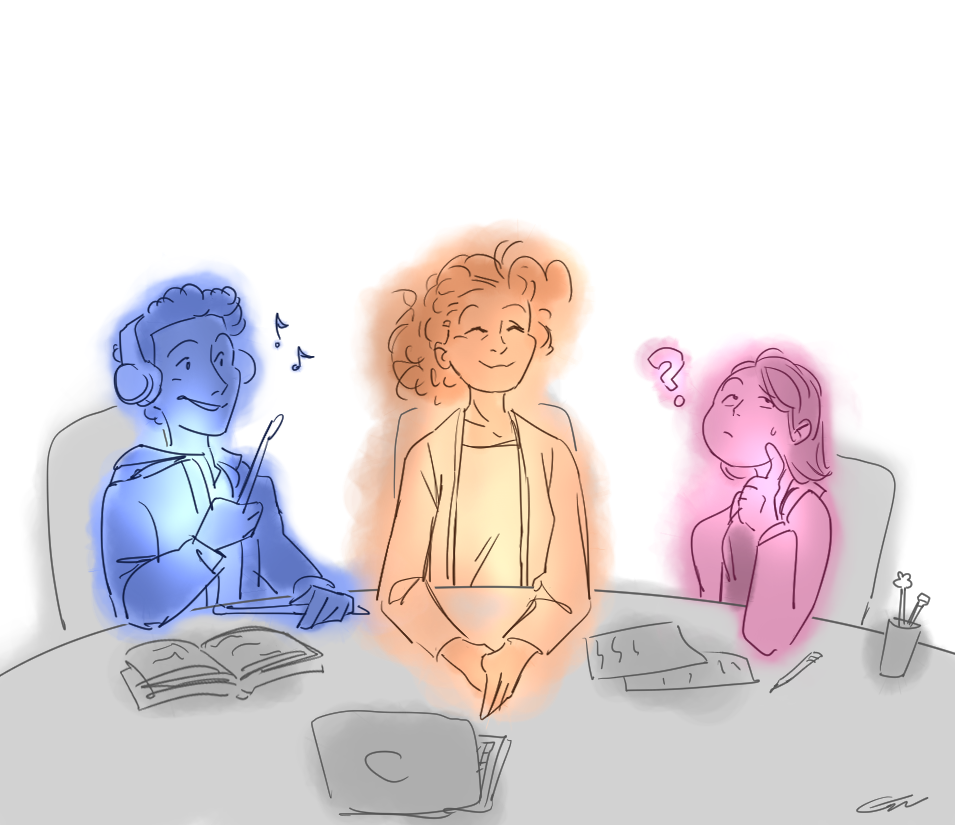
A Mother, a Son, a Daughter and the Truth About What Really Motivates Students
It started with a simple but unsettling realization: the system wasn’t built for her children.
As both a mother and an educator, she had seen it from the inside and the outside. Classrooms full of capable students, yet so many quietly disengaging. Labels were increasing. IEPs were rising. And still, too many learners were slipping through the cracks.
*
But this wasn’t just research.
This was her family.
A Different Kind of Beginning
Long before her children entered the school system, her own experience with education had already challenged the norm.
As a teenager, she made an unconventional choice to leave a traditional classroom and enter an alternative school. There, learning looked different. There were no neat rows of desks or rigid expectations. Instead, there were conversations, self-direction, and real-world experiences.
She remembers interviewing an author instead of writing a standard essay. She remembers sitting one-on-one with teachers who asked what she wanted to learn. For the first time, education didn’t feel like something to get through; it felt like something to be part of.
That experience shaped what she would later believe deeply:
Students don’t disengage because they don’t care. They disengage when learning stops feeling meaningful.
*
Matt: “I Knew I Was Smart… But School Didn’t See It”
Her son Matt experienced school very differently.
From the beginning, he was creative, expressive, and deeply connected to music. Rhythm made sense to him. Words, especially written ones, did not.
As a young child in a Montessori classroom, he thrived. His teacher sang his name during attendance. Mistakes were safe. Learning felt joyful. He felt seen.
But when he transitioned into a traditional school system, everything changed.
Despite being diagnosed with dysgraphia, Matt was expected to demonstrate his understanding primarily through writing. Hours were spent trying to force thoughts onto paper, thoughts he could easily express out loud or through music.
“I couldn’t understand why I wasn’t allowed to show what I knew in the ways that worked for me,” he reflected.
Over time, something shifted.
The joy he once felt about learning started to fade. Tasks began to feel overwhelming. Motivation dropped, not because he didn’t care, but because he no longer believed he could succeed.
This is what low self-efficacy looks like in real life.
Not laziness.
Not defiance.
But a quiet erosion of confidence built from repeated experiences of feeling unsuccessful.
And yet, when teachers took the time to understand him, when they allowed him to speak, create, and connect learning to his strengths; his motivation returned.
Not instantly. But noticeably.
Molly: “I Looked Successful… But I Was Struggling Inside”
Molly’s story looked very different on the surface.
She was diligent. High-achieving. Adaptable. The kind of student teachers often describe as “doing well.”
But her experience tells a more complicated story.
Adopted from China as an infant, Molly grew up navigating identity, belonging, and high expectations; both external and internal. When she entered French immersion at a young age, she struggled to understand the language, often relying on copying peers just to keep up.
Eventually, she transitioned back to English.
But instead of relief, she felt something else: failure.
“All my friends stayed in French,” she recalled. “I felt like I wasn’t good enough.”
From that moment on, Molly pushed herself relentlessly. She set high expectations. She chased top grades. She returned to an extended French program that she vowed never to give up. She worked hard, not necessarily because she loved the learning, but because she didn’t want to fall behind or be perceived as incapable.
This is what motivation driven by external pressure can look like.
It’s not always visible.
Students like Molly often appear successful, but underneath, they may be operating from anxiety, fear of failure, or a need for validation.
During high school, especially through the disruptions of the pandemic, this pressure intensified. Grades became everything. Tests became overwhelming. Even reassurance from teachers sometimes made it worse.
“Don’t worry, you’re already doing well,” they would say.
But that wasn’t what she needed.
She didn’t need validation of her intelligence.
She needed support in managing the process of learning.
What Their Stories Reveal
At first glance, Matt and Molly seem like opposites.
One disengaged. One over-engaged.
One struggled academically. One excelled.
But underneath, they were navigating the same core needs:
Do I feel capable? (competence)
Do I have control over my learning? (autonomy)
Do I feel understood and supported? (relatedness)
These are the foundations of self-determination theory, and when any of these needs go unmet, motivation begins to break down.
Matt lost his sense of competence in a system that didn’t value his strengths.
Molly lost her sense of autonomy, driven by expectations that didn’t always align with her own interests.
Both, at different times, questioned their place.
Both, at different times, struggled to stay motivated.
The Hidden Role of Mindset
There’s another layer to their stories: how they and the people around them, interpreted their abilities.
When Matt struggled, some assumed he wasn’t trying.
When Molly succeeded, others assumed she didn’t need support.
These assumptions reflect what psychologist Carol Dweck describes as a fixed mindset, the belief that ability is static.
But both students’ experiences tell a different story.
When Matt was allowed to learn through music and teaching others, he thrived.
When Molly was supported in focusing on growth rather than perfection, her anxiety began to ease.
Their abilities didn’t change.
The environment did.
And with it, their motivation.
A Moment That Says Everything
Years later, something powerful happened, quietly, almost unnoticed.
At the dining room table, Molly was tutoring a young student.
“Wow,” she said gently, “I can see how much you practiced. You should be really proud of yourself.”
Downstairs, Matt was teaching drum lessons, breaking down complex rhythms into simple, engaging steps, connecting through shared interests, just as he once needed.
Without formal training, both had become the kind of educators they once needed.
They weren’t focusing on grades.
They weren’t labeling ability.
They were building confidence, connection, and motivation, naturally.
Despite being different learners with different experiences, Molly and Matt both graduated high school as Ontario Scholars – and Molly with an extended French diploma. They both successfully graduated their post-secondary programs. But that’s not the point. It’s not always about grades; its about the journey. They are both exploring and pursuing careers they have selected for themselves that align with their own strengths and interests. And their mother has done the same. This family’s journey has impacted their levels of motivation in many different ways throughout each of their lives.
So What Needs to Change?
Their story doesn’t point to a single solution.
It points to a shift in mindset.
Instead of asking:
“How do we support this student?”
We might ask:
“What does this student need to feel motivated to learn?”
Because when we understand motivation, not just behavior; we begin to see students differently.
We see the child who isn’t trying… as someone who no longer believes they can.
We see the high achiever… as someone who may be quietly overwhelmed.
We see that motivation isn’t fixed, it’s shaped.
The Takeaway
This family’s story reminds us of something both simple and profound:
Students don’t all need different systems.
They need a system that understands them.
When we design learning around students’ strengths, support their psychological needs, and believe in their capacity to grow, we don’t just improve outcomes.
*
We change experiences.
And sometimes, that makes all the difference.
Study Smart’s Holistic Assessment may help you, your child and educators see your child in a completely different way!
Read the full story of this blog in the published article “Theories of motivation to support the needs of all learners: Examining a family’s diverse educational experiences” by Diane, Matt and Molly Montgomery (in the references below).
*
*
References:
Dweck, C.S. (2016) Mindset: The new psychology of success. Random House.
Montgomery, D. P., Montgomery, M., & Montgomery, M. (2023). Theories of motivation to support the needs of all learners: Examining a family’s diverse educational experiences. LEARNing Landscapes, 16(1), 213-227. https://doi.org/10.36510/learnland.v16i1.109
Ryan, R.M. & Deci, E.L. (2020). Intrinsic and extrinsic motivation from a self-determination theory perspective: Definitions, theory, practices, and future directions. Contemporary Educational Psychology. 61(2020).
*